




Water Management in Aquaculture: Essential Practices for Healthy Fish and Sustainable Production
Water is the foundation of aquaculture. Unlike livestock and crop farming, where soil and feed often receive most of the attention, fish farming depends almost entirely on the quality and management of water. No matter how good the feed is or how healthy the fish appear, poor water management can quickly lead to slow growth, disease outbreaks, reduced production, and significant financial losses.
Many fish farmers focus heavily on stocking, feeding, and harvesting while overlooking the condition of the water itself. Yet water serves as the environment in which fish live, breathe, feed, grow, and reproduce. When water quality declines, fish become stressed and less productive, making them more vulnerable to health problems.
Successful aquaculture therefore begins with proper water management. Farmers who understand how to maintain healthy water conditions are better positioned to achieve strong fish growth, high survival rates, and sustainable production over the long term.
Why Water Quality Is So Important
Fish depend on water in the same way humans depend on air. Every aspect of a fish’s life is influenced by the quality of the water around it.
Good-quality water supports normal fish behavior, efficient feeding, healthy growth, and resistance to disease. Poor-quality water, on the other hand, creates stress and weakens the fish’s natural ability to cope with environmental challenges.
When water conditions deteriorate, fish often reduce their feed intake, become less active, and experience slower growth. In severe situations, poor water quality can result in large-scale fish mortality, causing major losses for farmers.
For this reason, water management should be viewed as a daily responsibility rather than an occasional task.
Choosing a Reliable Water Source
The success of a fish farm often begins with the selection of a suitable water source.
A reliable source should provide sufficient water throughout the year while maintaining acceptable quality. Rivers, streams, boreholes, springs, and reservoirs are commonly used depending on local conditions.
Before establishing a fish farm, it is important to consider whether the water source can consistently meet the farm’s needs during both rainy and dry seasons.
Water shortages can create serious challenges, particularly during periods of high temperatures when fish require stable environmental conditions. A dependable water supply provides farmers with greater control over pond management and production planning.
Maintaining Adequate Oxygen Levels
One of the most critical factors in aquaculture is dissolved oxygen.
Fish obtain oxygen directly from the water, and insufficient oxygen levels can quickly lead to stress or death. Low oxygen conditions often occur when ponds are overcrowded, overfed, or heavily polluted with organic waste.
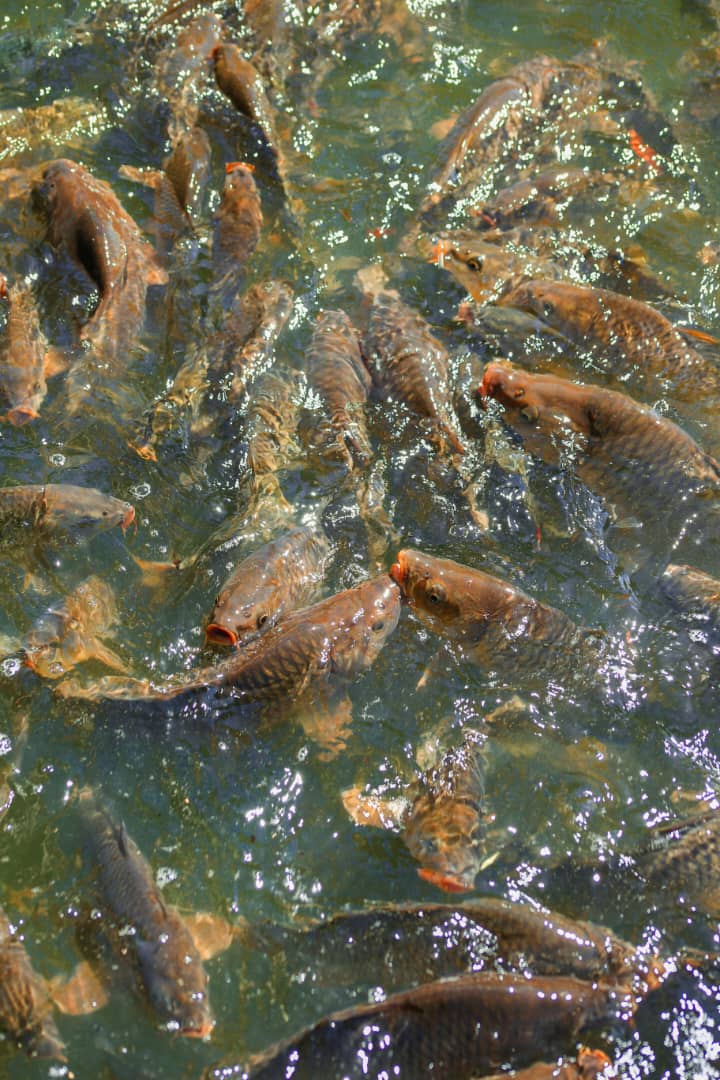
Farmers may notice fish gathering near the water surface, especially during the early morning hours, when oxygen levels are often at their lowest. This behavior can indicate that fish are struggling to obtain enough oxygen.
Good pond management practices such as avoiding overstocking, preventing excessive feed waste, and maintaining clean water help support adequate oxygen levels and improve fish health.
Managing Feed and Waste to Protect Water Quality
Feed is essential for fish growth, but poor feeding practices can negatively affect water quality.
Uneaten feed eventually decomposes in the pond, releasing substances that can pollute the water and reduce oxygen levels. Excessive feeding not only increases production costs but also creates conditions that may encourage disease outbreaks.
Farmers should provide feed according to the needs of the fish and carefully observe feeding behavior. Monitoring feed consumption helps reduce waste while ensuring fish receive adequate nutrition.
Effective feeding management is therefore one of the most important components of successful water management.
Monitoring Water Conditions Regularly
Many water quality problems develop gradually and may not be immediately visible.
Regular observation helps farmers identify changes before they become serious. Changes in water color, unusual odors, excessive algae growth, or abnormal fish behavior can all signal potential problems.
Farmers should pay close attention to:
- Fish feeding activity.
- Water clarity.
- Water color.
- Unusual fish behavior.
Consistent monitoring allows farmers to take corrective action early and prevent larger production challenges.
Controlling Excessive Algae Growth
Algae are a natural part of aquatic ecosystems and can be beneficial in moderate amounts. However, excessive algae growth can create problems.
Large algal blooms may cause dramatic fluctuations in oxygen levels, particularly between day and night. In some cases, excessive algae can contribute to poor water quality and increased fish stress.
Managing nutrient levels within the pond and avoiding overfeeding can help prevent uncontrolled algae growth. Maintaining balance is often more effective than attempting to eliminate algae completely.
Preventing Water Pollution
Water pollution remains one of the greatest threats to aquaculture production.
Agricultural chemicals, livestock waste, industrial pollutants, and household waste can all contaminate fish ponds if proper precautions are not taken.
Farmers should protect water sources from contamination and avoid practices that may introduce harmful substances into production systems.
Clean water not only supports fish health but also improves the quality and safety of harvested fish.
The Importance of Water Exchange
In some aquaculture systems, periodic water exchange helps maintain favorable conditions.
Replacing a portion of pond water can remove accumulated waste products, improve water quality, and help stabilize environmental conditions. However, water exchange should be conducted carefully to avoid sudden changes that may stress fish.
The need for water exchange varies depending on the production system, stocking density, and water quality conditions.
Proper planning helps ensure that water replacement supports rather than disrupts fish production.
Sustainable Water Management for the Future
As aquaculture continues to expand worldwide, responsible water use is becoming increasingly important.
Farmers are encouraged to adopt practices that conserve water while maintaining productivity. Efficient water use helps protect natural resources and supports long-term sustainability.
Sustainable water management benefits not only individual farms but also surrounding communities and ecosystems that depend on shared water resources.
By treating water as a valuable resource rather than an unlimited commodity, fish farmers can contribute to a more resilient aquaculture industry.
Conclusion
Water is far more than just the environment in which fish live it is the single most important factor influencing fish health, growth, and farm productivity. Effective water management supports healthy fish, improves feed efficiency, reduces disease risks, and increases overall production success.
From selecting a reliable water source and maintaining adequate oxygen levels to controlling pollution and monitoring water conditions, every aspect of water management contributes to the sustainability of an aquaculture enterprise.
For fish farmers seeking long-term success, investing time and effort in water management is one of the most valuable decisions they can make. Healthy water creates healthy fish, and healthy fish are the foundation of profitable and sustainable aquaculture production.
📩 Subscribe to Agronela Insights for expert content on Aquaculture, Crop Production, Livestock & Poultry, Food Nutrition & Health, and Agribusiness.
🌱 Informing, inspiring, and empowering the agricultural community.